
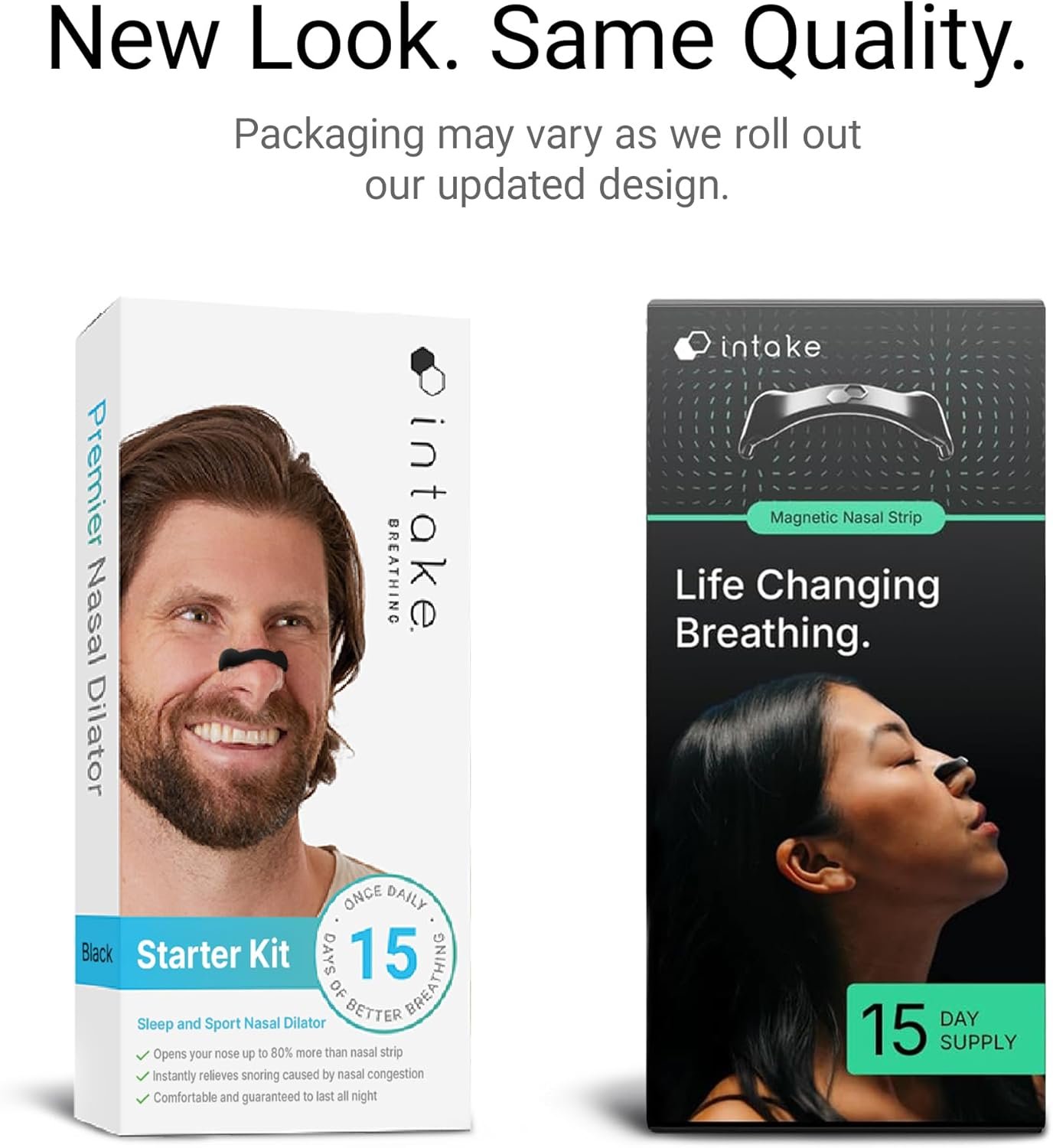
Intake Breathing Review (2026): Are Magnetic Strips Better Than Regular Ones?
As a biohacker, I’ve spent years obsessing over every variable of my sleep hygiene—from blue light blocking to temperature regulation. But none of those matter if your airway is compromised. If you’re waking up with a dry mouth, a foggy brain, or a partner complaining about your snoring, you are likely a “mouth breather” by night.
Today, we’re looking at a piece of hardware that has gained a cult following in the biohacking community: Intake Breathing. It’s not just a sticker; it’s a magnetic skeletal system for your nose.
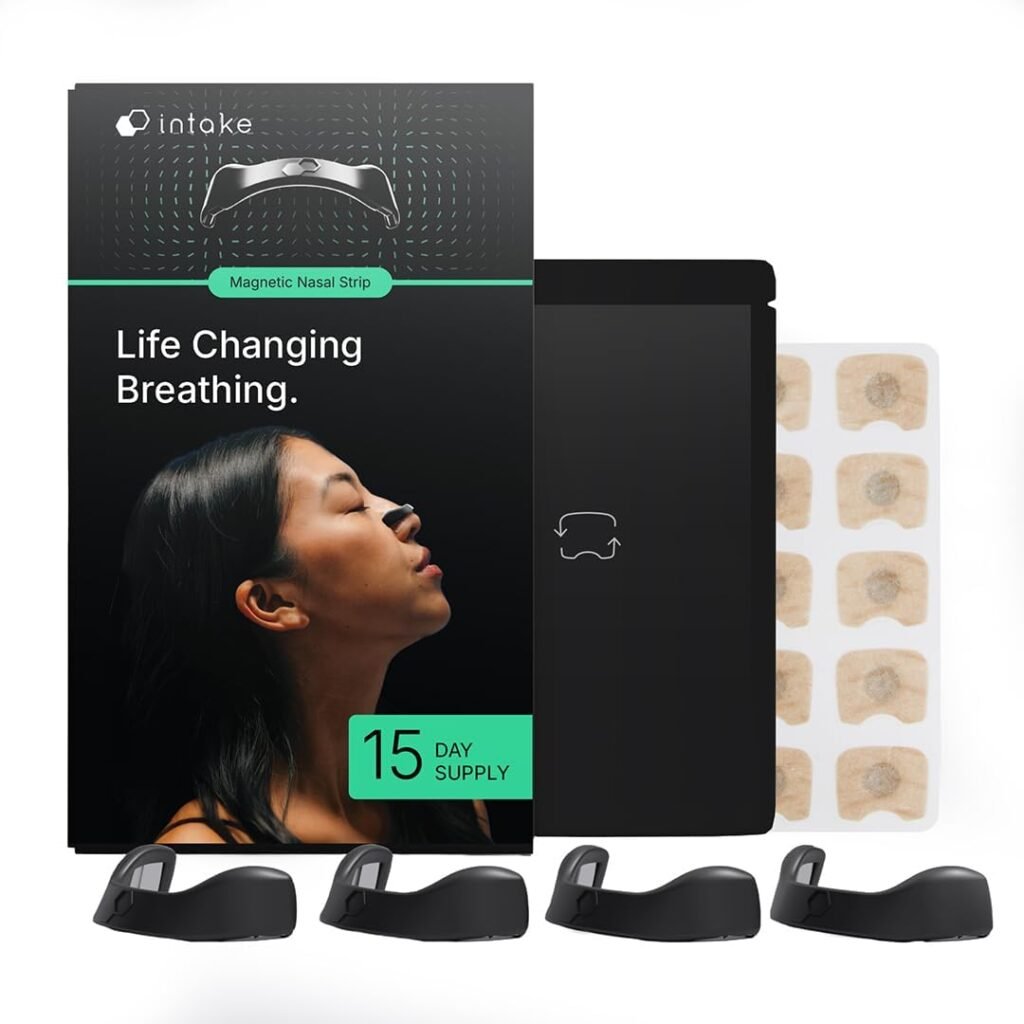
Table of Contents
The Problem: Mouth Breathing is Ruining Your Performance
Most people view snoring as a nuisance, but it’s actually a sign of inefficient biology. When you breathe through your mouth, you bypass the body’s natural filtration and humidification system.
More importantly, mouth breathing prevents the production of Nitric Oxide. This molecule is produced in the paranasal sinuses and is a potent vasodilator. It helps increase oxygen uptake in the lungs and improves blood flow. When you force nasal breathing, you optimize your Parasympathetic Nervous System, leading to deeper REM and Slow Wave Sleep (SWS).
How It Works: The 3-Part Magnetic System
Unlike traditional strips that rely on the tension of a plastic bridge, Intake uses a patented magnetic mechanism.
- Adhesive Tabs: You apply two small, medical-grade adhesive patches to the outside of each nostril. Each tab contains a small steel disk.
- The Magnetic Band: A rigid, reusable bridge with magnets at both ends.
- The Applicator: A small tool used to ensure the tabs are perfectly symmetrical on your nose for maximum leverage.
When you snap the band onto the tabs, the magnetic force pulls the nostrils outward against the rigid band. It doesn’t just “lift” the skin; it physically cranks the nasal passage open.
Performance Test
During Sleep: Does it stop snoring?
The immediate sensation is a “rushing” of air. Because the band is rigid, it cannot collapse. For those with a deviated septum or narrow nasal valves, the difference is night and day. In my testing, my Oura Ring and Whoop data showed a consistent 5-10% increase in blood oxygen saturation ($SpO_2$) and fewer “respiratory disturbances” throughout the night. It effectively keeps the mouth closed by making nasal breathing the path of least resistance.
During Exercise: High-Intensity Breathing
Traditional strips often fail the “sweat test.” Intake’s adhesive tabs are remarkably resilient. During a 5km run or a heavy lifting session, the tabs stayed locked in place. The ability to maintain nasal breathing during zone 2 and zone 3 cardio is a game-changer for CO2 tolerance and athletic endurance.
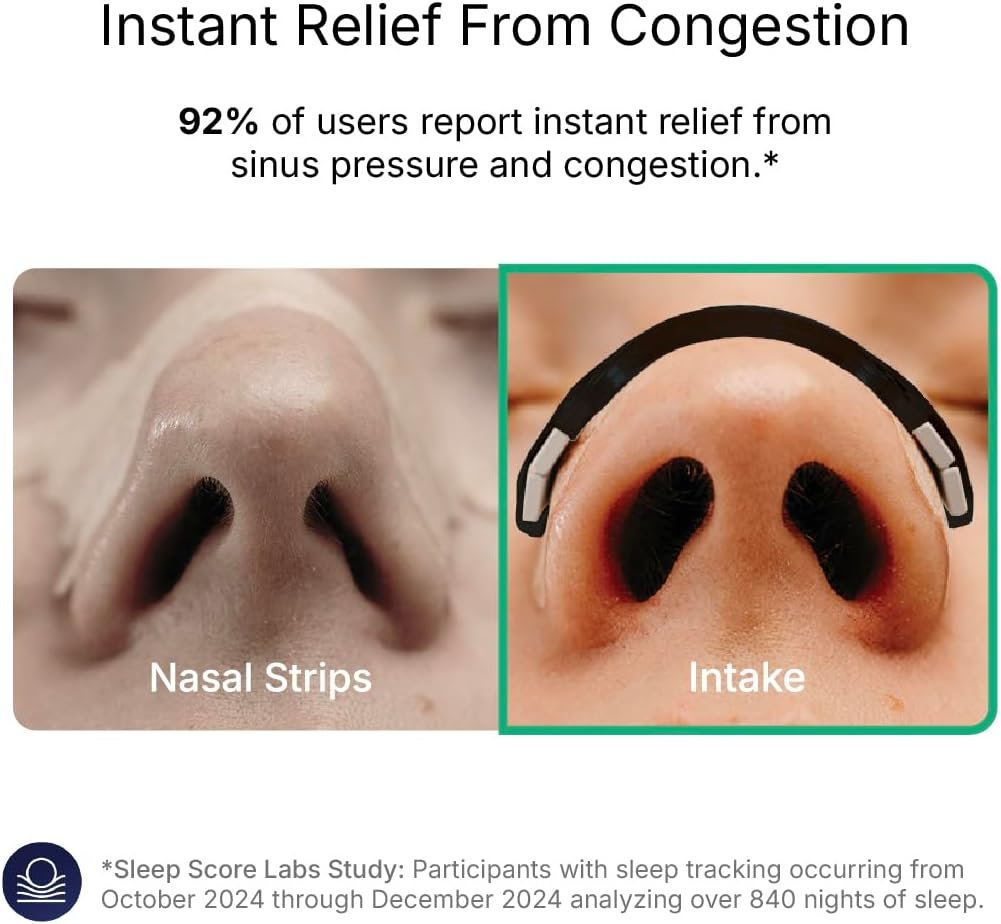
Comparison: Intake vs. Breathe Right
| Feature | Breathe Right (Traditional) | Intake Breathing (Magnetic) |
| Opening Force | Moderate (Spring-like tension) | High (Rigid magnetic pull) |
| Stay Power | Can peel off with sweat/oil | Sweat-resistant adhesive |
| Comfort | Can irritate the bridge of the nose | No pressure on the bridge; only nostrils |
| Reusability | Single-use only | Reusable Band (only tabs are replaced) |
| Cost | Low | Higher upfront (Starter Kit required) |
Pros & Cons
Pros
- Guaranteed Airflow: The rigid band prevents the “collapse” that happens with flexible strips.
- No Bridge Irritation: Since the band arches over the nose, it doesn’t rub the skin raw on your nasal bridge.
- Nitric Oxide Boost: Effortless nasal breathing throughout the night.
- Exercise Ready: The best option for athletes who want to avoid mouth breathing.
Cons
- Learning Curve: It takes a few tries to get the tab placement right.
- Initial Cost: The starter kit is an investment compared to a box of drugstore strips.
- Visual: You look a bit like a “cyborg”—though most biohackers wear that as a badge of honor.
Verdict: The Heavy Artillery for Heavy Snorers
If you’ve tried traditional nasal strips and found them “weak” or prone to falling off, Intake Breathing is the upgrade you need. It is the “heavy artillery” of sleep optimization. While it’s more expensive than basic strips, the quality of oxygenation and the resulting deep sleep recovery make it a staple in any serious biohacking toolkit.
Final Thought: If you want to stop snoring and start optimizing your brain’s nighttime recovery, stop taping your mouth and start opening your nose.