Does Red Light Therapy Actually Work? The Science & Best Value Device (2026)
From its origins as NASA technology used to grow plants in space and heal astronaut wounds, Red Light Therapy (RLT)—clinically known as Photobiomodulation (PBM)—has moved from elite clinics directly into our bedrooms.
It isn’t “magic” or a marketing gimmick; it is physics meeting biology. By using specific wavelengths of light, we can essentially “recharge” our biological batteries. If you are a biohacker looking for an edge, an athlete chasing recovery, or someone battling chronic inflammation, understanding RLT is the first step toward cellular optimization.
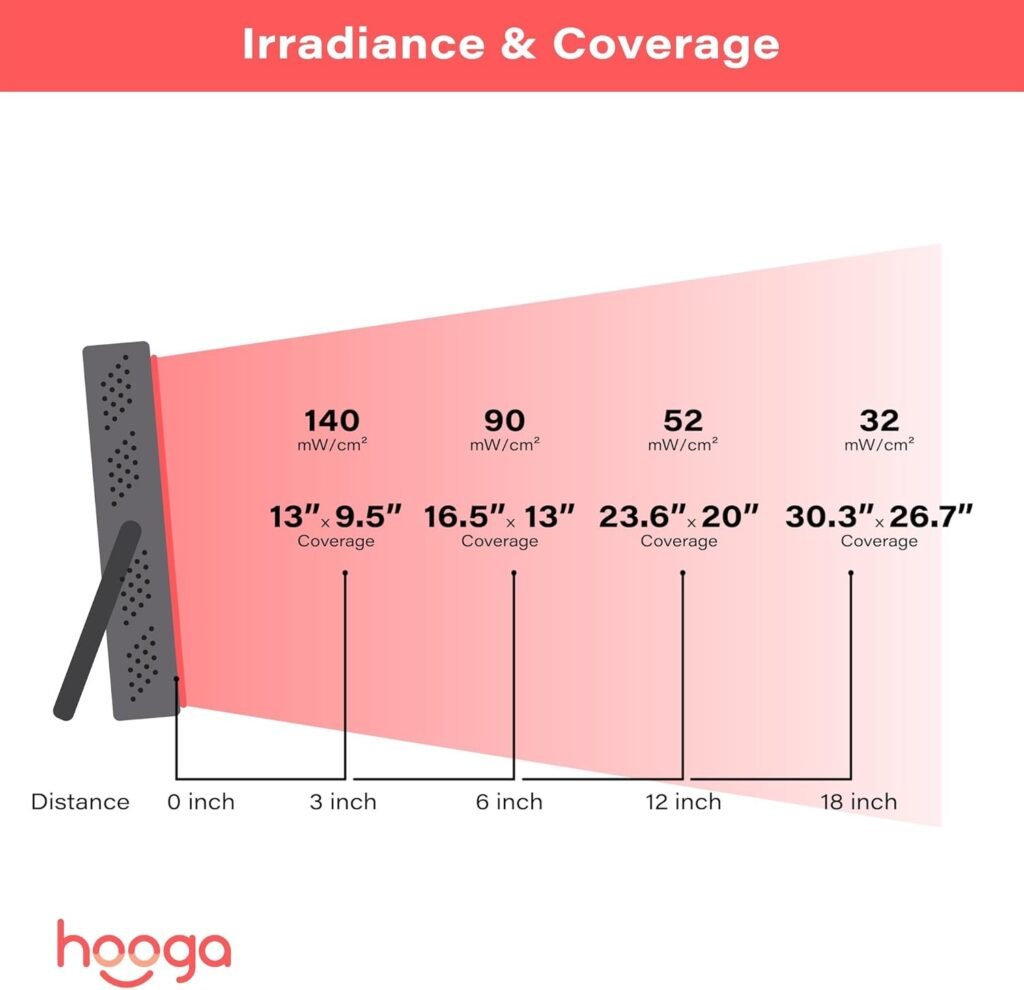
Table of Contents
The Science: “Food for Your Cells”
To understand RLT, we have to look inside your cells. Think of your body as a high-performance machine that runs on a currency called ATP (Adenosine Triphosphate).
The Mechanism
- Light Absorption: When you stand in front of a device like the Hooga HG300, photons of light penetrate your skin.
- The Target: These photons are absorbed by a photoreceptor in your mitochondria called Cytochrome C Oxidase (CCO).
- The Reaction: This absorption breaks the bond between Nitric Oxide and CCO, allowing oxygen to rush back in.
- The Result: Your mitochondria can now produce ATP more efficiently. More ATP means your cells have more energy to repair damage, reduce inflammation, and function at peak performance.
The Power of Wavelengths
Not all light is created equal. For therapeutic results, we focus on the “Bio-active” spectrum:
- Red Light (660nm): This wavelength is absorbed primarily by the skin tissue. It is the gold standard for collagen production, wound healing, and surface-level rejuvenation.
- Near-Infrared Light (850nm): Invisible to the naked eye, NIR penetrates much deeper—reaching muscles, joints, and even bone. This is what triggers deep tissue repair and systemic inflammation reduction.
Top 5 Benefits of Photobiomodulation
1. Skin Health & Anti-Aging
RLT is a powerhouse for Collagen synthesis. Regular exposure helps reduce fine lines, wrinkles, and acne scars by increasing the elasticity of the skin and Improving blood flow to the dermis.
2. Muscle Recovery & Pain Relief
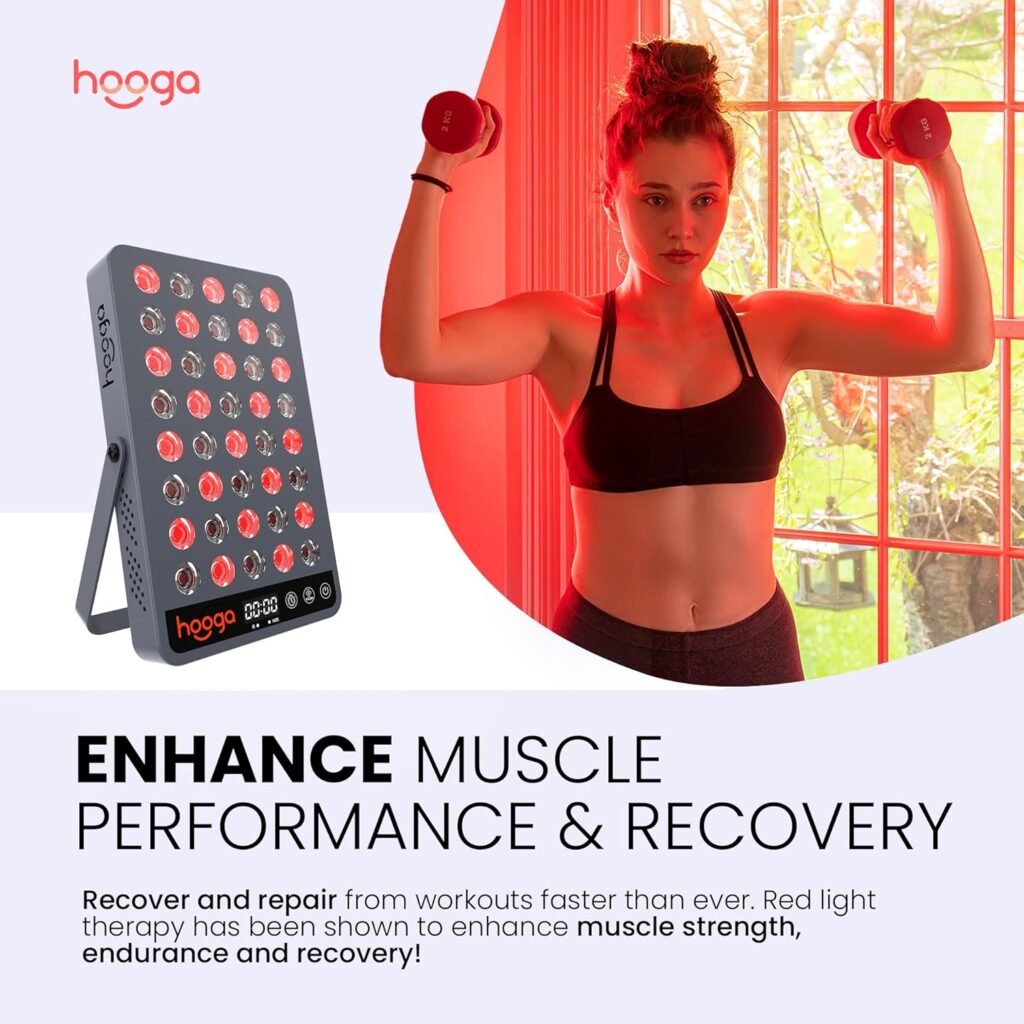
By reducing oxidative stress in the muscle tissues, RLT helps athletes bounce back faster. It flushes out lactic acid and downregulates pro-inflammatory cytokines, making it a “must-have” for chronic joint pain sufferers.
3. Sleep Optimization
Blue light from screens wrecks our Circadian Rhythm. Exposure to Red Light in the evening mimics the sunset, stimulating the natural production of Melatonin and helping you fall into a deeper, more restorative sleep.
4. Hair Growth
Studies show that PBM can stimulate the hair follicles, moving them from the resting phase into the growth phase, making it a non-invasive tool for combatting thinning hair.
5. Hormonal Support
Emerging research suggests that RLT applied to specialized glandular tissue may support healthy Testosterone levels in men by optimizing the energy production in Leydig cells.
Product Review: Hooga HG300
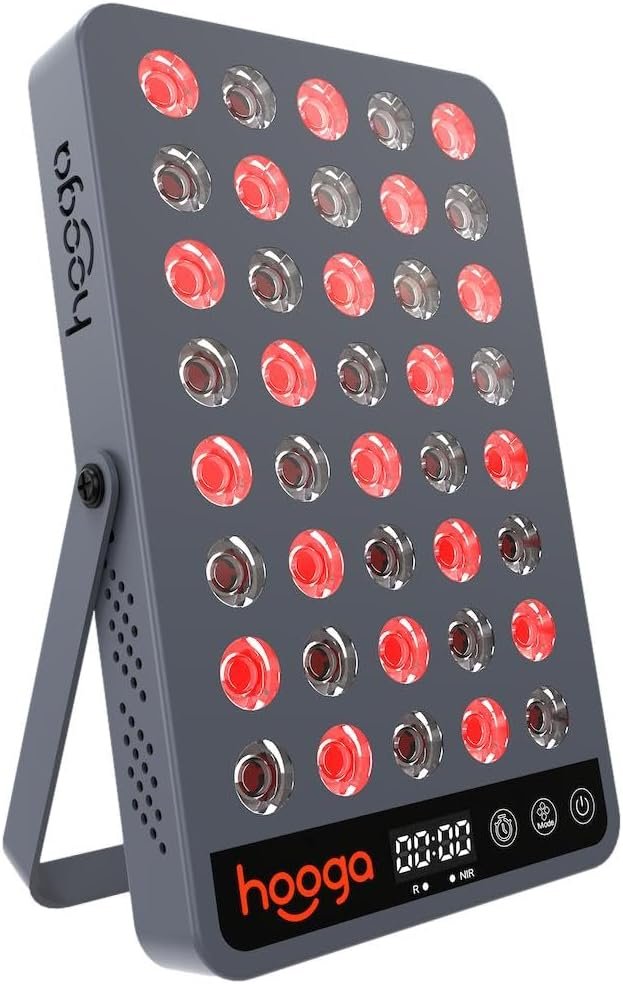
While the market is flooded with cheap “beauty masks” and overpriced $1,000+ panels, the Hooga HG300 has become the “sweet spot” for the serious biohacking community.
Build Quality & Specs
The HG300 is a tank. It’s a heavy-duty, steel-cased panel that feels industrial.
- LEDs: 60 High-power Dual Chip LEDs.
- Wavelengths: A perfect 50/50 split of 660nm and 850nm.
- Modular Design: You can link multiple units together as your budget grows.
The “Irradiance” Test: Why Power Matters
In RLT, Irradiance (the intensity of light over an area) is everything. If the light is too weak, you won’t reach the “threshold” required for CCO stimulation.
The Hooga HG300 delivers >100mW/cm² at 6 inches. This is “raw power” territory. While big brands focus on Bluetooth apps and touchscreen displays, Hooga puts that money into the drivers and the LEDs themselves.
Usage Guide: How to Optimize Your Session
- Distance: Stand 6 to 12 inches away.
- Duration: 10 minutes per treatment area.
- Frequency: 3-5 times per week.
- Pro Tip: Do not over-treat. Like a workout, too much light can cause “diminishing returns” where the cell becomes overstimulated.
Comparison: Hooga HG300 vs. Joovv Solo
| Feature | Hooga HG300 | Joovv Solo (Gen 3) |
| Irradiance | $>100mW/cm^2$ | ~100mW/cm^2 |
| Connectivity | Basic Switches (Manual) | Bluetooth / App / Alexa |
| Price | ~$150 – $200 | ~$600 – $700 |
| Value Prop | Maximum power per dollar | Aesthetics and Smart Features |
The Argument: If you want a device that talks to your phone, buy a Joovv. If you want the exact same biological result for 1/4th of the price, the Hooga HG300 is the clear winner.
Pros & Cons
Pros:
- High irradiance for deep penetration.
- No-flicker drivers (important for eye health).
- Budget-friendly without sacrificing clinical efficacy.
- Cooling fans are surprisingly quiet.
Cons:
- No built-in timer (you’ll need your phone or a kitchen timer).
- The aesthetics are “functional” rather than “sleek.”
Verdict: The Smartest Entry-Level Panel
The Hooga HG300 is the “minimalist’s dream.” It strips away the marketing fluff and gives your mitochondria exactly what they need: high-intensity, flicker-free bio-active light. For anyone starting their biohacking journey in 2026, this is the most logical, science-backed investment you can make for under $200.